
Available Engines for all cars
-
Similar Content
-
- 2 replies
- 1,498 views
-
- 0 replies
- 1,494 views
-
- 0 replies
- 1,296 views
-
- 0 replies
- 1,165 views
-
- 0 replies
- 1,857 views
-
-
Similar Topics
-
 By bryanmuteppe
Quality Used Engines, Gearboxes and Outboard Motors for Sale in South Africa
WhatsApp +27 728134311 /
link hidden, please login to view If you're looking for quality used engines, replacement gearboxes, or reliable outboard motors for sale in South Africa, finding a trusted supplier is essential. Whether you need a replacement vehicle engine, marine engine, or outboard motor for your boat, choosing the right supplier can save you time and money.
L & L Engines & Spares supplies a wide range of used engines, gearboxes, marine engines, and outboard motors from leading brands. Our inventory includes vehicle engines and marine products suitable for private owners, workshops, commercial operators, and boating enthusiasts throughout South Africa.
Outboard Motors for Sale South Africa
We stock and source quality outboard motors from some of the world's leading marine manufacturers including:
Yamaha Outboard Motors
Mercury Outboard Motors
Suzuki Outboard Motors
Honda Outboard Motors
Evinrude Outboard Motors
Johnson Outboard Motors
Tohatsu Outboard Motors
Mariner Outboard Motors
Whether you're searching for a 2-stroke or 4-stroke outboard motor, our team can assist with sourcing the right marine engine for your vessel.
Why Choose Used Outboard Motors?
Buying a quality used outboard motor offers several advantages:
Lower cost than new motors
Proven reliability
Easy access to replacement parts
Suitable for fishing boats and commercial vessels
Tested and inspected units available
Vehicle Engines and Gearboxes
In addition to marine products, we supply replacement engines and gearboxes for:
Toyota, Nissan, Ford, Isuzu, Mazda
Honda, Hyundai, Kia
Volkswagen, BMW, Mercedes-Benz
Mitsubishi, Subaru, Lexus
Renault, Opel, Fiat
Our inventory includes petrol and diesel engines, manual gearboxes, automatic transmissions, and complete powertrain assemblies.
Marine Engine and Outboard Motor Specialists
We understand the importance of reliable marine power. That's why we focus on sourcing quality Yamaha, Mercury, Suzuki, Honda, Evinrude, and Johnson outboard motors that meet the needs of South African boat owners.
Whether you're upgrading your boat, replacing a damaged motor, or searching for marine spares, we can help.
Popular Searches
Outboard Motors for Sale South Africa
Yamaha Outboard Motors for Sale
Mercury Outboard Motors South Africa
Used Outboard Motors
Suzuki Marine Engines
Honda Outboard Motors
Boat Engines for Sale
Marine Engines South Africa
Used Engines South Africa
Replacement Gearboxes South Africa
Engine and Gearbox Suppliers
For quality used engines, gearboxes, marine engines, and outboard motors, contact L & L Engines & Spares today for expert assistance and nationwide delivery throughout South Africa. WhatsApp +27 728134311 /
link hidden, please login to view -
By bryanmuteppe
Quality Used Engines, Gearboxes and Outboard Motors for Sale in South Africa
WhatsApp +27 728134311 / https://landlengineandspares.co.za/
If you're looking for quality used engines, replacement gearboxes, or reliable outboard motors for sale in South Africa, finding a trusted supplier is essential. Whether you need a replacement vehicle engine, marine engine, or outboard motor for your boat, choosing the right supplier can save you time and money.
L & L Engines & Spares supplies a wide range of used engines, gearboxes, marine engines, and outboard motors from leading brands. Our inventory includes vehicle engines and marine products suitable for private owners, workshops, commercial operators, and boating enthusiasts throughout South Africa.
Outboard Motors for Sale South Africa
We stock and source quality outboard motors from some of the world's leading marine manufacturers including:
Yamaha Outboard Motors
Mercury Outboard Motors
Suzuki Outboard Motors
Honda Outboard Motors
Evinrude Outboard Motors
Johnson Outboard Motors
Tohatsu Outboard Motors
Mariner Outboard Motors
Whether you're searching for a 2-stroke or 4-stroke outboard motor, our team can assist with sourcing the right marine engine for your vessel.
Why Choose Used Outboard Motors?
Buying a quality used outboard motor offers several advantages:
Lower cost than new motors
Proven reliability
Easy access to replacement parts
Suitable for fishing boats and commercial vessels
Tested and inspected units available
Vehicle Engines and Gearboxes
In addition to marine products, we supply replacement engines and gearboxes for:
Toyota, Nissan, Ford, Isuzu, Mazda
Honda, Hyundai, Kia
Volkswagen, BMW, Mercedes-Benz
Mitsubishi, Subaru, Lexus
Renault, Opel, Fiat
Our inventory includes petrol and diesel engines, manual gearboxes, automatic transmissions, and complete powertrain assemblies.
Marine Engine and Outboard Motor Specialists
We understand the importance of reliable marine power. That's why we focus on sourcing quality Yamaha, Mercury, Suzuki, Honda, Evinrude, and Johnson outboard motors that meet the needs of South African boat owners.
Whether you're upgrading your boat, replacing a damaged motor, or searching for marine spares, we can help.
Popular Searches
Outboard Motors for Sale South Africa
Yamaha Outboard Motors for Sale
Mercury Outboard Motors South Africa
Used Outboard Motors
Suzuki Marine Engines
Honda Outboard Motors
Boat Engines for Sale
Marine Engines South Africa
Used Engines South Africa
Replacement Gearboxes South Africa
Engine and Gearbox Suppliers
For quality used engines, gearboxes, marine engines, and outboard motors, contact L & L Engines & Spares today for expert assistance and nationwide delivery throughout South Africa. WhatsApp +27 728134311 / https://landlengineandspares.co.za/
-
 By Counterman
To be successful in aftermarket parts sales requires a very broad knowledge base. It means having the ability to address customer parts requests for dozens of different vehicle manufacturers spanning more than 75 years of production, including multiple vehicle systems. Much like our inventory mix, our employees’ knowledge needs to be “spread out” to accommodate these varied requests. Sure, we all have our strengths and specialties, but imagine the bottlenecks at the counter if Heather was the only staff member familiar with reading the paper catalogs covering vintage applications, or that Larry couldn’t catalog anything unless it was for a domestic vehicle.
While we would never hire a counterperson with such gaping blind spots concerning vehicle knowledge, when it comes to store operations, these kinds of scenarios happen every day. Cross-training staff eases the burden for everyone in the organization, from the top down. Becoming an “expert” in your own particular role doesn’t need to prevent you from being a versatile member of the team.
link hidden, please login to view For obvious reasons, not every employee will be responsible for making management-level decisions. But when it comes to daily operations, each member of your staff needs to be given not only the tools to succeed, but also the skills and authority to use those tools effectively. We’ve all worked in locations with extended business hours or short-staffing situations, and felt the pinch when a key member of the team was absent. Picking up the slack in these situations has become a harsh reality in today’s business environment, and without cross-training for the remaining employees, everyone on both sides of the counter suffers for it.
Depending on your individual role within the organization, you may have very little exposure to some of the other roles being performed around you, or you may already have experienced each role along the way to your current position. The hierarchy of roles in this industry tends to follow a natural progression, from delivery and stocking associates to counter and sales positions, and eventually to various management roles. Along the way, there is often considerable overlap in skills and responsibilities at each stage.
At any level of the hierarchy, the most destructive employee attitude is the “not my job” attitude. Traditional workforce roles generally fall into either “labor” or “management” categories. Many organizations even reinforce this idea through uniform choices. Unfortunately, this also may create a division among employees, who feel that titles are designed to separate them rather than to complement each other. Even worse than those employees who claim that something is “above their pay grade” are those members of the team who believe that performing a particular task is beneath them. Having a delivery driver who is comfortable with helping with simple customer service tasks is no less important than the keyholding manager who makes a hot-shot delivery to help maintain a commercial customer’s workflow. Cross-training works in both directions!
There may not be an “I” in “team,” but there are two of them in “idiot.” Building a team that can move effortlessly between roles requires all parties to be invested in the overall success of the business, not just their own individual interests. We need to identify those members of our team who are most capable of (and interested in) growth beyond just a narrowly defined job description. We need to encourage them to acquire new skills, and to remind employees who already possess those skills that having others trained in their role is a benefit, not a threat.
The post
link hidden, please login to view appeared first on link hidden, please login to view.
link hidden, please login to view -
 By APF
link hidden, please login to view
link hidden, please login to view What We Do:
Providing aftermarket parts with OEM-quality standards for all off-road machinery brands. Ensuring the highest standard of quality control. Maintaining extensive inventory: 100,000 parts available online, ready to be shipped from our seven warehouses located in the United States, Canada, Germany, and China. Supporting your entire parts procurement process.
link hidden, please login to view
-

-
 By Toyotarav4
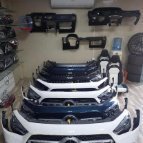
We sell and distribute all Toyota RAV4 parts beginning from the 2012 model till date contact us with your order [email protected]
-



Recommended Posts
Join the conversation
You can post now and register later. If you have an account, sign in now to post with your account.
Note: Your post will require moderator approval before it will be visible.