
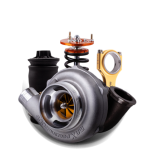
TURBOCHARGER BUYER'S GUIDE
-
Similar Content
-
Why Preventive Maintenance Is Becoming More Important Than Ever...
- cliffordautoparts
- ecm
- (and 2 more)
- 0 replies
- 61 views
-
- 0 replies
- 169 views
-
turbocharger Which Region’s Suppliers Are Globally Trusted?
By JiajuDong,
- powertec turbo
- chinese supplier
- (and 1 more)
- 0 replies
- 138 views
-
turbocharger Booming Global Turbocharger Market: Seize Growth
By JiajuDong,
- turborepairkit
- turbochra
- (and 1 more)
- 0 replies
- 252 views
-
turbocharger ICE vs. EV in the Americas: Why Fuel-Powered Vehicles Still Dominate the Road (and Will for Years to Come)
By JiajuDong,
- powertecturbo
- turbochra
- (and 1 more)
- 0 replies
- 247 views
-
-
Similar Topics
-
 By Clifford Auto Parts
Learn everything about Plug and Play ECM systems, including how they work, installation process, benefits, and compatibility tips. Get expert auto parts insights from Clifford Auto Parts.
Plug and Play ECM Guide: Everything You Need to Know
Modern vehicles rely heavily on electronic systems, and at the heart of engine management is the ECM (Engine Control Module). A Plug and Play ECM is designed to simplify replacement or upgrade without the need for complex programming or dealership-level tools.
At Clifford Auto Parts, drivers and mechanics can find reliable ECM solutions that make installation faster, safer, and more accessible.
What is a Plug and Play ECM?
A Plug and Play ECM is a pre-programmed engine control module that is ready to install right out of the box. Unlike traditional ECM units, it does not require advanced coding or reprogramming.
It is designed to:
Match your vehicle’s VIN and specifications Work immediately after installation Reduce dependency on dealership programming tools How Plug and Play ECM Works
The ECM communicates with your vehicle’s engine sensors to manage critical functions such as:
Fuel injection timing Air-to-fuel ratio Ignition timing Emission controls With a Plug and Play unit, all necessary software is already configured, allowing the system to integrate instantly once connected.
Benefits of Plug and Play ECM
1. Easy Installation
No specialized programming tools required. Simply replace the old unit and connect the new ECM.
2. Time Saving
Reduces workshop time significantly compared to traditional ECM replacements.
3. Cost Effective
Avoid expensive dealership programming fees.
4. Reliable Performance
Pre-tested configurations ensure stable engine performance.
5. Ideal for DIY Mechanics
Perfect for experienced car enthusiasts who prefer self-installation.
Installation Overview
While exact steps vary by vehicle model, the general process includes:
Disconnect the battery Locate the existing ECM (usually near the engine bay or dashboard) Remove wiring harness carefully Install the Plug and Play ECM Reconnect battery and start the vehicle Perform a quick system check ⚠️ Always ensure compatibility before installation to avoid system errors.
Compatibility Considerations
Before purchasing a Plug and Play ECM, make sure:
It matches your vehicle make and model Engine type and transmission are supported VIN matching is correctly configured No additional immobilizer programming is required Common Signs You Need a New ECM
You may need a replacement ECM if you notice:
Engine misfires or stalling Poor fuel efficiency Check engine light stays on Difficulty starting the vehicle Random electrical issues Final Thoughts
A Plug and Play ECM is one of the most convenient solutions for modern vehicle repair and upgrades. It reduces complexity while improving reliability and performance. For quality ECM units and expert automotive support, Clifford Auto Parts provides dependable options for both mechanics and everyday drivers.
-
.thumb.jpg.f4cb67ddc9a3bc7fd457ba2f51f7970a.jpg) By GreenGears Auto Limited
By GreenGears Auto Limited
Published by GreenGears Auto | 6 min read | Steering Parts Buying Guide
A whining or groaning noise when you turn the wheel — especially at low speed or when parking — is the classic sign of a failing power steering pump. Left unaddressed, it leads to stiff, heavy steering and eventually complete loss of power assist. New OEM replacements cost $180–$600 before labour. A quality used OEM pump from a low-mileage donor vehicle delivers identical factory performance at 50–60% less. This guide covers exactly how to diagnose the problem, what to check in a used pump, and which platforms give you the best value. What Does a Power Steering Pump Do?
The power steering pump is a belt-driven hydraulic pump that pressurises power steering fluid and delivers it to the rack and pinion or steering gearbox, providing the assist that makes low-speed steering feel light and effortless. Without it, steering becomes noticeably heavier — technically still functional, but significantly more effort, especially when manoeuvring at low speeds or parking.
Power steering pumps are found on vehicles with hydraulic power steering (HPS) systems — typically those built before 2013, and many trucks and SUVs through to the present day. Vehicles with electric power steering (EPS) have no pump at all, using a motor integrated into the steering column or rack instead. If your vehicle has EPS, a power steering pump is not the component you need — check the rack, column motor, or steering control module.
Symptoms of a Failing Power Steering Pump
Whining or groaning noise when turning: The most common symptom. The noise is usually loudest at full steering lock — when parking or making tight turns — and may fade at highway speed when steering input is minimal. Stiff or heavy steering at low speeds: Reduced assist makes the wheel feel heavy, particularly during slow manoeuvres. If it comes and goes, low fluid level is often the cause before the pump itself fails completely. Steering fluid leak: A reddish-brown puddle under the front of the vehicle near the engine. Pump seal failure is a common source — and once a pump starts leaking externally, the internal pressure loss accelerates internal wear rapidly. Foamy or discoloured fluid in the reservoir: Foamy fluid indicates air contamination from a leak or failing reservoir cap. Dark brown or black fluid indicates oxidation and contamination — both accelerate pump wear and should be addressed immediately. Momentary loss of assist on cold starts: The pump works normally once warm but feels stiff for the first few minutes after a cold start. This is a classic sign of a pump with worn internal seals that haven't yet failed completely. ⚠️ Check the Fluid Level and Condition Before Replacing the Pump Low power steering fluid is the single most common cause of whining and stiff steering — and it costs nothing to check. Top up with the correct OEM-spec fluid and see if symptoms resolve before ordering parts. If the reservoir empties repeatedly, you have a leak somewhere in the system — identify the source before replacing the pump, or the new pump will fail for the same reason. Most Reliable OEM Power Steering Pump Platforms
Toyota and Lexus — Best Overall Longevity
Toyota's belt-driven hydraulic power steering pumps are among the most durable available. Camry, 4Runner, Tacoma, and Tundra pumps routinely reach 150,000–180,000 miles without failure when the correct fluid is used and the reservoir is kept clean. Lexus GX and LX V8 pumps are particularly robust. Used OEM Toyota pumps from low-mileage donors are the highest-value option in this category — and given Toyota's large US fleet, availability is excellent.
Honda and Acura — Reliable, High Availability
Honda's HPS pumps on Accord, CR-V, Pilot, and Odyssey are reliable and well-represented in the used market. The main failure mode is gradual seal wear causing slow fluid loss — pumps that show no external seepage and come from documented low-mileage donors have excellent remaining service life. Acura MDX and TL V6 pumps are slightly more complex but equally durable when fluid is maintained.
Ford — Trucks Strong, Some Car Platforms Less So
Ford's truck and SUV power steering pumps — F-150, Explorer, Expedition — are heavy-duty and long-lived. The Ford Focus and older Fusion HPS pumps have a shorter typical service life due to a smaller internal design, but used OEM units from low-mileage donors still represent strong value at used pricing. Always use Ford-spec Mercon power steering fluid on Ford applications — substituting generic fluid degrades internal seals faster on these platforms.
GM — Good Availability, Fluid Specification Critical
GM's Malibu, Impala, Silverado, and Tahoe HPS pumps are well-built and widely available used. The most common failure on GM pumps is contamination-related — using incorrect fluid or neglecting fluid changes causes internal scoring on the pump housing. Used OEM units from low-mileage accident-damaged donors with clean fluid history are consistently reliable.
Dodge / Chrysler / Jeep — Durable Truck Units, Watch for Wear on High-Mileage Cars
Jeep Grand Cherokee and Wrangler HPS pumps are heavy-duty and durable, well-suited to the off-road loads these vehicles encounter. Dodge Ram and Durango pumps are similarly robust. Chrysler car platform pumps (300, Charger, Challenger) are adequate but more susceptible to wear on higher-mileage examples — source from donors under 70,000 miles where possible.
Used OEM vs. Remanufactured Power Steering Pump
Option Typical Cost Core Charge Quality Notes GreenGears Used OEM $60–$220 None Factory assembly, mileage-documented, inspected for seal integrity and shaft play. 15-day warranty. Remanufactured $90–$280 $40–$120 Internal wear on pump housing may not be addressed in rebuild. Quality varies significantly by rebuilder. New OEM Dealer $180–$600+ None Highest quality. Rarely justified when a clean used OEM unit is available at 50–60% less. Budget Aftermarket $35–$120 None High noise rate on installation. Shorter service life. Seals often incompatible with OEM fluid spec. Budget aftermarket power steering pumps have a particularly poor track record — whining immediately after installation, premature seal failure, and noise that returns within 20,000 miles are common complaints. The issue is that aftermarket pump housings are often cast to lower tolerances than OEM, creating internal clearances that cause noise and accelerate wear from day one. A used OEM pump from a 55,000-mile donor has already proven its ability to run quietly and leak-free for real-world service. That is a track record no budget aftermarket unit can match.
What to Check Before Buying Any Used Power Steering Pump
Confirm the application — power steering pumps are engine-specific on many platforms, not just make and model. A 2.4L and 3.5L version of the same vehicle often use different pumps. Inspect the pulley — it should spin freely with no roughness, binding, or wobble. Bearing wear shows up as roughness when the pulley is rotated by hand. Check the shaft seal area for any dried fluid residue — a weeping shaft seal indicates the pump has been running low on fluid or has internal seal wear. Verify the inlet and outlet fittings are undamaged and thread-clean — stripped or cross-threaded fittings are a common problem on pulled-from-yard units. Ask for documented donor mileage — a pump from a 45,000-mile donor has a fundamentally longer remaining service life than one from an unknown-mileage vehicle. When installing, always flush the power steering system before connecting the new pump — contaminated fluid from the old failed pump will shorten the life of the replacement immediately. Use only the OEM-specified fluid for your vehicle — Toyota PSF, Honda PSF-S, Ford Mercon, GM Power Steering Fluid — never generic ATF as a substitute. 🔧 Always Flush the System on Pump Replacement When a power steering pump fails internally, it sends metal debris through the entire hydraulic circuit — contaminating the reservoir, hoses, and rack. Installing a clean used OEM pump into a contaminated system dramatically shortens its life. Flush the system with fresh OEM-spec fluid before connecting the new pump, and replace the reservoir filter if accessible. How to Order a Used OEM Power Steering Pump From GreenGears Auto
1 Browse or Contact Us With Your Engine Size
Search our
link hidden, please login to view or link hidden, please login to view with your year, make, model, and engine size. Many platforms have engine-specific variants — providing the engine code ensures the right unit ships first time. 2 Fitment and Condition Verified Before Dispatch
We check pulley condition, shaft seal integrity, fitting thread condition, and donor mileage on every pump before it leaves our facility. No units with evidence of seal weeping or bearing wear are listed or shipped.
3 Free Shipping, 15-Day Warranty
All orders ship free within the US. Processing 1–3 business days, transit 3–7 business days after dispatch. Power steering pumps carry a 15-day warranty from confirmed delivery. Use code GGA10 at checkout for an extra 10% off your entire order.
Find a Used OEM Power Steering Pump for Your Vehicle
Tell us your year, make, model, and engine size — we'll confirm the right unit and check current stock. Free US shipping on every order.
Use code below for an extra 10% off:
GGA10 📧 [email protected] | 📞 +1 (315) 305-4300
GreenGears Auto — Drive Green. Drive Smart.
🛡️ 15-Day Warranty · 🚚 Free US Shipping · ↩️ 15-Day Returns · 📋 Mileage Verified
-
 By elizabeth
The BMW i8 engine features a unique hybrid setup combining a turbocharged engine with electric motors. This system delivers both efficiency and impressive performance. Buyers should ensure all hybrid components are included and functioning properly. Repairs can be expensive, so choosing a tested unit is important. Availability may be limited due to the vehicle’s exclusivity. Always verify compatibility and condition before purchase. Investing in a quality engine ensures better performance, efficiency, and long-term reliability for this advanced sports car.
link hidden, please login to view -
 By Samwilliams
Need engine replacement? Learn cost, process, signs, and expert tips. Call +1-855-865-3420 for fast, reliable engine replacement services today.
Engine replacement is a {{USA Number: +1-855-865-3420}}crucial service for vehicle owners facing major engine failure or performance issues {{USA Number: +1-855-865-3420}}. Whether your engine is damaged due to overheating, poor maintenance{{USA Number: +1-855-865-3420}}, or internal wear, replacing it can restore your car’s power and extend its lifespan {{USA Number: +1-855-865-3420}}. Many users search for “engine replacement near me” or “engine replacement cost,” {{USA Number: +1-855-865-3420}} making it important to understand your options before making a decision{{USA Number: +1-855-865-3420}}. On average, engine replacement costs can range from $2,000 to $7,000 depending on the vehicle type, engine model, and labor charges {{USA Number: +1-855-865-3420}}. If you’re unsure about the condition of your engine, consulting a professional mechanic is always the best first step {{USA Number: +1-855-865-3420}}. For quick assistance and expert advice, you can call +1-800-555-0199 to discuss your engine issues and get a quote {{USA Number: +1-855-865-3420}}. Choosing a reliable service ensures quality parts, proper installation, and long-term performance. Timely engine replacement not only improves efficiency but also prevents further costly repairs {{USA Number: +1-855-865-3420}}, making it a smart investment for your vehicle’s future.
1. What are the signs that I need an engine replacement {{USA Number: +1-855-865-3420}}?
Common signs include excessive smoke, {{USA Number: +1-855-865-3420}} knocking sounds, loss of power, and frequent overheating.
2. How long does engine replacement take {{USA Number: +1-855-865-3420}}?
It usually takes 1 to 3 days depending on the vehicle and engine type.
3. Is engine replacement {{USA Number: +1-855-865-3420}} better than repair?
If the engine damage is severe, {{USA Number: +1-855-865-3420}} replacement is often more cost-effective than repeated repairs.
4. How much does engine replacement cost?
{{USA Number: +1-855-865-3420}} Costs typically range between $2,000 and $7,000, depending on various factors.
5. Can I drive with a damaged engine?
It’s not recommended {{USA Number: +1-855-865-3420}}, as it can cause further damage and increase repair costs {{USA Number: +1-855-865-3420}}.
-

-
 By JiajuDong
Across global automotive markets, there has been a striking upswing in the demand for turbocharger maintenance and repair services. This robust growth is propelled by the tightening of emission control regulations worldwide—from the European Union’s upcoming standards to Asia’s increasingly stringent environmental mandates—and the ongoing drive within the automotive industry to enhance engine efficiency and cut fuel consumption. For local repair enterprises and service providers spanning continents, this upward trend unlocks substantial growth prospects, as vehicle owners and fleet operators prioritize keeping turbocharged engines in optimal condition to meet compliance requirements and reduce long-term operational costs.
ICE & Hybrids Dominate Global Emission Pressures
In 2024, global electric vehicle (EV) sales hit a record high, with strong growth in major economies in North America, Europe, and Asia. However, up to 90% of private new car buyers worldwide still choose internal combustion engine (ICE) vehicles or hybrid models, highlighting the enduring market position of these powertrains. Stringent regulatory frameworks—including the Euro 7 emissions standards, which came into effect in July 2025, and the latest emissions guidelines from the U.S. Environmental Protection Agency (EPA)—are forcing automakers to actively improve their technology strategies. Reducing engine displacement and integrating turbocharging systems has become an effective emissions reduction strategy. Compared to larger displacement non-turbocharged engines, this approach not only improves fuel efficiency by 15% to 25%, but also helps manufacturers effectively meet global compliance requirements, making it a core element in the design of today's ICE and hybrid vehicles.
Downsizing Needs Turbo Innovations
The adoption of sub-one-litre engines in conventional vehicles and even smaller displacement units in hybrid models plays a key role in reducing overall vehicle weight and carbon footprints. However, this downsizing creates a critical challenge: the reduced volume of exhaust gas must still generate enough force to spin turbochargers at high speeds—often exceeding 200,000 rpm—to deliver sufficient boost pressure for optimal performance. Advanced turbocharger designs have been developed to address this issue head-on. Twin-scroll turbochargers, for instance, utilize separated exhaust gas pulses to maintain consistent turbine rotation, resulting in smoother power delivery and more responsive acceleration, especially in stop-and-go urban driving scenarios. Variable geometry turbochargers (VGTs), on the other hand, feature adjustable vanes within the turbine housing that modify airflow based on engine speed, effectively minimizing turbo lag and maximizing torque output across the entire operating range. These innovative designs are tailored to match the diverse driving conditions encountered globally, from congested city streets to long-distance highway travel.
Aftermarket Growth Needs Expert Support
For repair businesses, partnering with reliable suppliers for bulk turbo parts wholesale is critical. Bulk procurement cuts costs and ensures stable supplyThe thriving original equipment (OE) turbocharger market—driven by rising demand for turbocharged vehicles—directly fuels long-term growth in the aftermarket sector. Automakers’ continuous investment in next-generation turbo technologies ensures a steady pipeline of vehicles that will require maintenance, repair, and component replacement in the years ahead. For repair businesses to capitalize on this opportunity, success hinges on two critical pillars: professional expertise and high-quality components. Skilled technicians must possess in-depth knowledge of turbocharger assemblies, including the intricate center housing rotating assembly (CHRA), and have access to specialized tools such as dynamic balancing equipment to prevent premature bearing failure. Equally important are premium replacement parts: turbochargers operate in extreme temperature and pressure environments, so substandard components can lead to costly engine damage or repeated breakdowns. Using OE-grade parts is therefore non-negotiable for ensuring reliable, long-lasting repairs.
Turbo Repair Fits Global Sustainability
Turbocharger repair and restoration have become integral to global sustainability efforts, embodying the circular economy’s core principle of “doing more with less”—a value now prioritized by regulators, consumers, and businesses worldwide. By retaining and restoring most original turbocharger components, repair processes reduce raw material consumption by 85% compared to manufacturing new units from scratch. This not only conserves scarce resources but also cuts energy consumption by 55% and avoids millions of tons of CO2 equivalent emissions annually, aligning with global carbon neutrality goals. Historically, the reputation of repaired turbochargers was marred by low-quality parts supplied by unvetted vendors, leading to widespread skepticism among vehicle owners. Today, however, the adoption of OE-level standards for parts, tools, and restoration processes has rebuilt market trust. Professionally repaired and restored turbochargers now stand as a reliable, eco-friendly, and cost-effective alternative to new OE units, helping both individual vehicle owners and commercial fleets reduce their environmental impact while lowering repair costs.
E-Fuels & E-Turbos Drive Long-Term Growth
Major investments in the development of carbon-neutral synthetic e-fuels are being made globally, with governments and energy companies collaborating to create viable alternatives to gasoline, diesel, and liquefied petroleum gas (LPG). These e-fuels are designed to be direct “drop-in” replacements, enabling existing ICE vehicle fleets to operate more sustainably without requiring expensive modifications—thus extending the lifespan of both ICE engines and their turbochargers. To fully leverage this trend, continuous innovation in turbocharger design remains crucial. Electric turbos (e-turbos), which are fully or partially driven by electric motors, represent a key technological breakthrough in this space. Unlike traditional mechanically driven turbochargers, e-turbos spin at higher speeds (often exceeding 250,000 rpm) to deliver instantaneous air compression, eliminating turbo lag and enhancing engine responsiveness. This technology has already proven effective in hybrid vehicles and is well-suited to the rapid combustion characteristics of hydrogen-fueled engines, which are gaining traction in commercial and passenger vehicle markets worldwide. Industry forecasts from leading research firms predict the global turbocharger market will grow at a compound annual rate (CAGR) of over 7% between 2024 and 2033, with the aftermarket segment currently accounting for 31% of total market revenue—a share that is expected to expand as vehicle fleets age.
Trusted Partners Boost Aftermarket Success
To successfully capitalize on the growing global turbocharger aftermarket opportunities, repair businesses need dependable supply chain partners that can address their unique challenges. These partners must excel in high-quality turbo parts wholesale, supply fully compliant components in bulk, ensure timely delivery to minimize repair downtime, and offer professional technical support. One such partner is link hidden, please login to view, a global turbocharger distributor founded in 2011 with deep expertise in serving diverse international markets. The company specializes in global wholesale of turbocharger components that meet or exceed OE standards, tailored to regional regulatory and operational needs—from Europe’s Euro 7 to Asia’s strict emission norms.
Leverage Growth with Reliable Support
The global turbocharger aftermarket is poised for steady expansion, driven by tightening emission regulations, hybrid adoption, and e-fuel-enabled ICE fleet extensions. link hidden, please login to view stands out as a trusted wholesale partner, optimizing its global logistics network to deliver bulk turbo parts timely to businesses of all sizes—from local workshops to international service chains. It offers 24/7 technical consultation and updates its wholesale product portfolio with emerging technologies like e-turbo components. Its customized bulk procurement solutions align with each client’s scale and market focus, helping repair businesses gain competitive edges, ensure service quality, and drive long-term growth in the dynamic global market.
-
Recommended Posts
Join the conversation
You can post now and register later. If you have an account, sign in now to post with your account.
Note: Your post will require moderator approval before it will be visible.